About Green Working Courses
Make time to explore forgotten crafts with one of our Green Woodworking Courses run across one of our two sites; our woodland site near Warminster or our indoor training room at our office and workshop near Marlborough, Wiltshire. The day starts at 9:30am with a safety briefing, we will take a short break at lunchtime when you can enjoy a bowl of home-made vegetable soup and crusty bread if you wish. Hot drinks will be available throughout the day, you can help yourself. The day will end at about 4.00pm. or there abouts.
Your tutors Peter & Jacqui are professional wood smiths. They are passionate about rural and traditional crafts from around the world. They have been running courses for several years and have just been awarded ‘Best Woodland Course’. Their mission is keeping these crafts and traditions alive by providing informative hands on sessions to others. They have gained their skills over many years by joining other like-minded craftsmen from around the world.


Make a Traditional Swallowtail Rake
Since the mechanisation of farming the traditional trade of rake making has almost vanished. There are only a handful of traditional Rake Makers left and people like our selves that are passionate about keeping these old crafts alive.
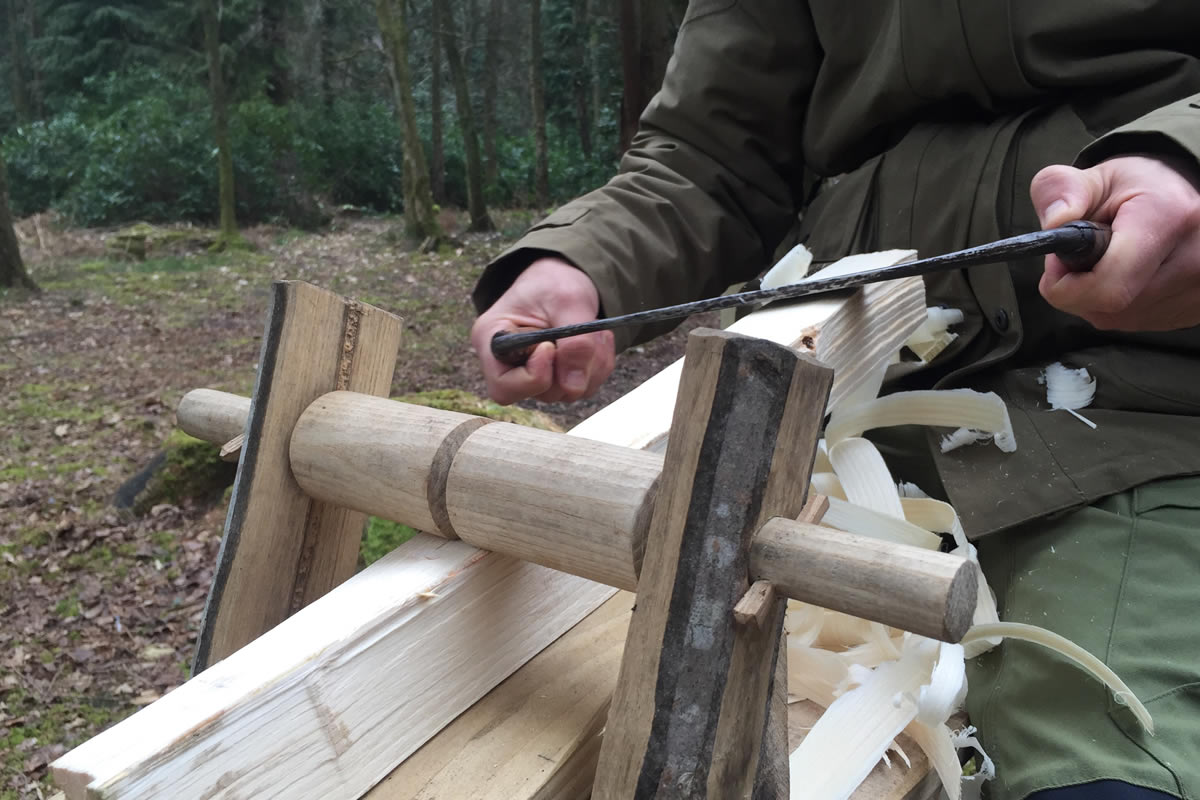
During the day you will make your own swallowtail rake to take home with you. The rake is a beautiful tool, which will serve you well in the garden. Whilst making your rake you will learn about the traditional methods used to craft this simple but very effective tool. You will also discover and use a wide range of green woodworking tools.
Cleft gate hurdle Making
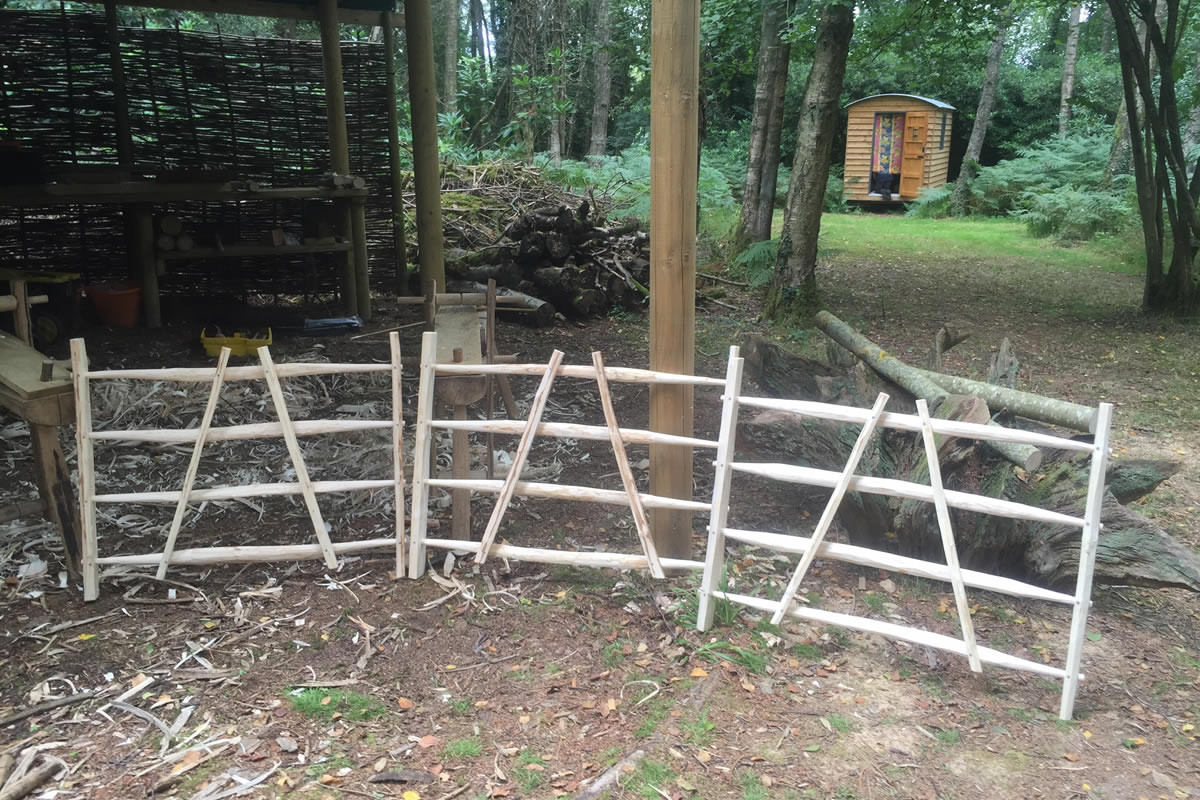
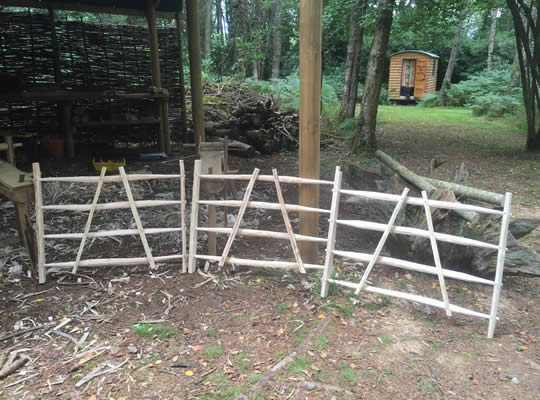
Cleft gate hurdles were traditionally used by downland shepherds in southern England to make sheep pens.These cleft gates have strong regional ties but all are constructed in much the same way. The regional differences that can be seen are in width, height and number of rails used but all have the bottom rails closely spaced to prevent older ewes pushing their heads through and to stop lambs escaping.
They were made from Sweet Chestnut or Ash but much depended on what was available in the area. This type of hurdle making involves making several components. The heads (vertical end posts) of the hurdles are slotted to accept the rails. The slots were made by drilling through and then cleaning out with a twybil.
During the course of the day, you will have the opportunity to use a wide range of green woodworking tools. These tools will help you to create your very own scaled down version of a cleft gate hurdle, which you can then take home.
Dala Horse Carving
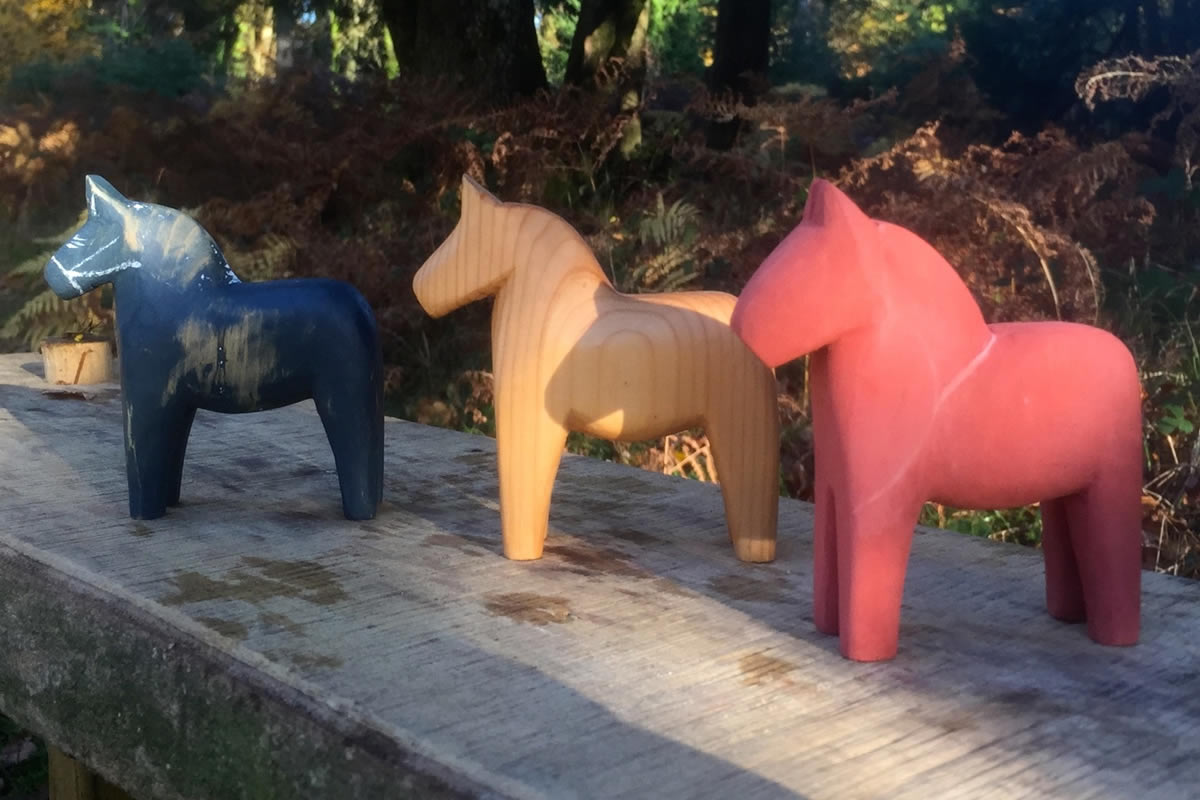
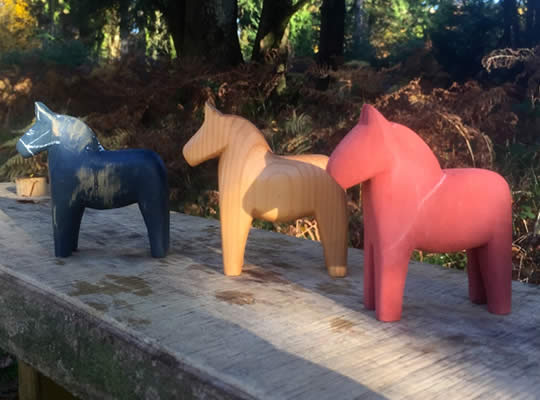
The Dala Horse is a traditional and much loved hand carved wooden horse. They were carved by men working in the forests during long winter evenings and brought back to the village for the children to play with.
The little wooden horse from Dalarna became a world celebrity when it appeared at the World Exhibition in 1939.
Your Dala Horse will be carved from a pre shaped pine blank which you will then bring to life using simple carving techniques.
Spoon Carving - The Slöjd Way
No one can really say when the first spoon appeared but we can safely say that they have been in existence for thousands of years.
The humble spoon has been found all around the world in various locations, which range from the tombs of the pharaohs in Egypt to an Iron Age settlement here in the UK. The spoon which was found during the excavation of the settlement at Glastonbury Lake Village dates back to 250 BC.
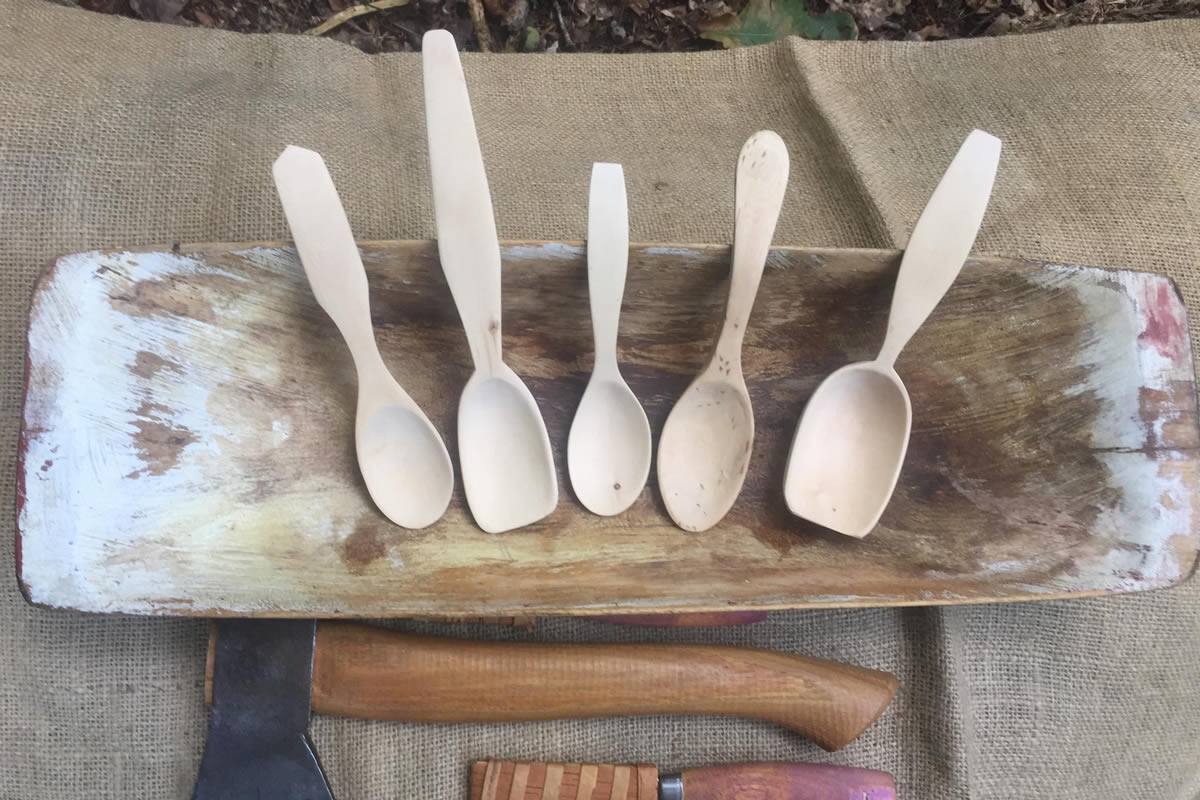
In more recent years the carving of green wood has seen a revival and the humble wood spoon has taken the top notch. But spoon carving is not just about the end product; to us it is much much more. Hence the methodology we use is based around the Swedish approach of woodcarving called ‘Slöjd’. The ‘Slöjd Way’ as we call it, is about choosing the right material for the job. Visualising the object in the selected material and then crafting that material, using simple tools and techniques to create a functional item, which is pleasing to the eye.
Your spoon will be inspired and created by you using the ‘Slöjd Way’.


Shrink Pot Carving
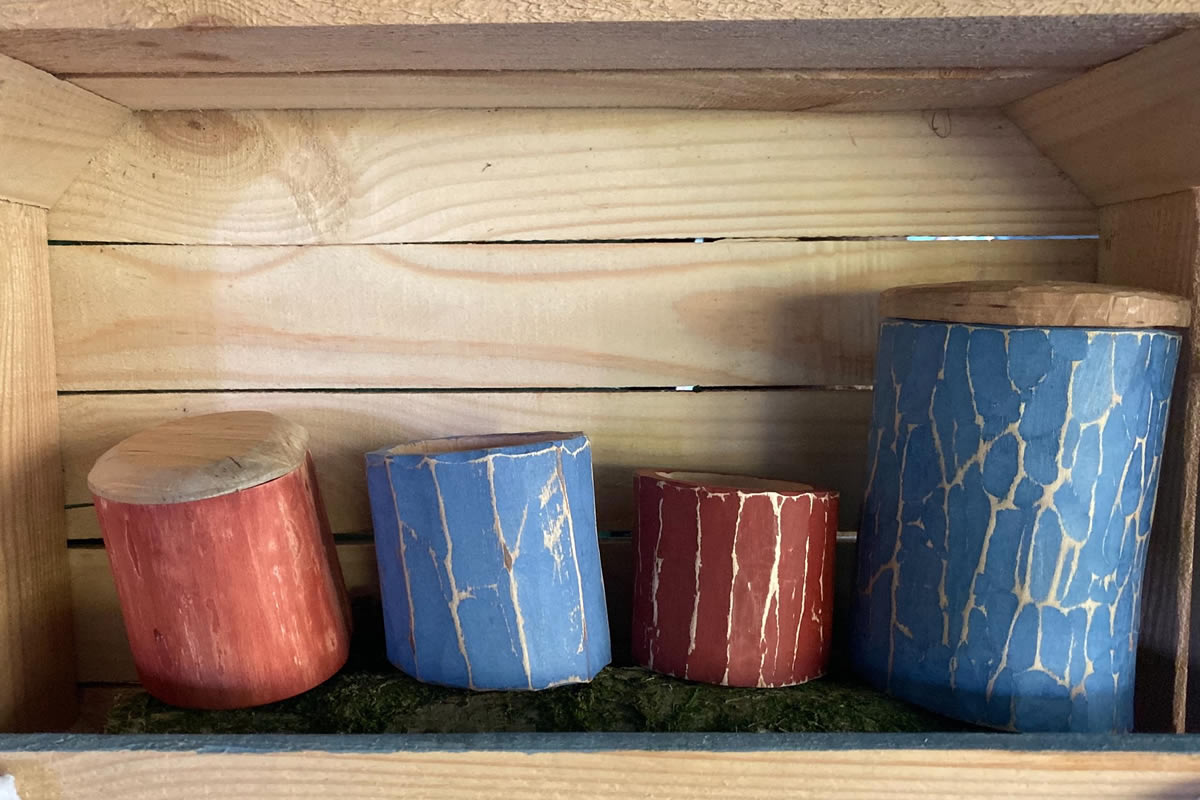
Shrink Pots are often referred to as Shrink Boxes also in Sweden known as Krmnbark and believed to have originated from Scandinavia. The Vikings would have carved them to make Containers to store Dry food in, and can vary in sizes depending on what you want to store in them.
The pots are made from freshly felled green wood. A section from a branch or trunk is taken depending on the size of pot you want or need. This log is then drilled through, before hollowing out from each end with a knife. Once the desired wall thickness (approx 8mm) is achieved, a groove is carved near the bottom edge of one end. Next you take a dry piece of wood to make a base, this piece is shaped and fitted into the groove and then the magic begins. Hey presto … as the pot dries it shrinks around the base holding it firmly in position. We will guide you through the process to create your own Shrink Pot.
Client testimonials
Course Gallery